


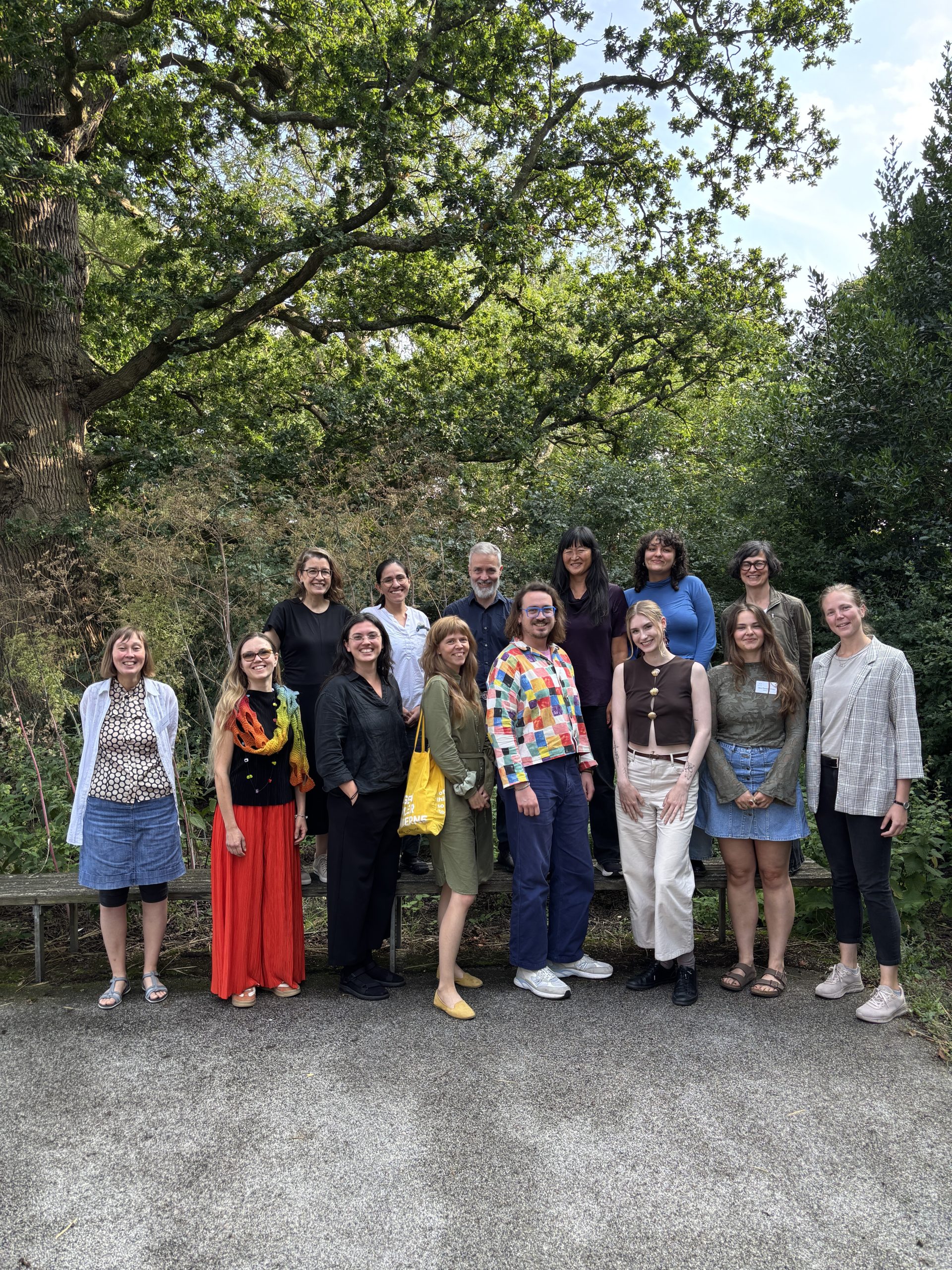
In 2025, twelve Danish-English literary translators descended on Norwich to attend the renowned BCLT (British Centre for Literary Translators) Summer School. The Danish workshop was led by Paul Russell Garrett and supported by Danish author Eva Tind. DELT supported three Danish-English literary translators with a bursary – here is a story from one of them.
By Sheila Nyholm D’Souza
As an emerging translator, I tend to apply for anything translation-related with a kind of reckless abandon. Even if I’m ignored or rejected, the application process itself is valuable practice in the kind of writing most translators dread: writing about ourselves. At the start of 2025, I applied for a spot at the BCLT Summer School at the University of East Anglia. I had no real expectation of being accepted, but the program sounded too interesting not to try. A few months later, I was both surprised and delighted to learn that I had secured a place and was even awarded a bursary from DELT to attend. I had two key expectations going into the Summer School: to learn more about the field of literary translation and to start building a network. I’m happy to say that both were absolutely met. It was an engaging and challenging week with plenty of opportunities to connect with other participants. As I learn more about this career, I’ve realized that there is so much about the translation industry that is not written down. If you are not studying translation at university, then you really need to meet people already working in the field to understand how to go about things. Fortunately, one of the best things about translators is their generosity in sharing knowledge. The language-specific translation sessions were a highlight for me, and our instructor Paul Russell Garrett did a great job keeping us focused and engaged. It was a privilege to have Eva Tind attend our sessions as we worked on translating excerpts from some of her books. It is a rare opportunity to have an author available for questions in such a casual setting. We had a session with publishers and some creative writing workshops, too. I was initially hesitant about the creative writing workshops, but they turned out to be a great reminder that creativity is a key part of literary translation. The exercises we did in these sessions also helped to loosen up some mental muscles that came in handy during the language-specific workshops. I picked up some new translation techniques, and it was reassuring to find that some of my methods overlap with those of my colleagues. I met some fantastic people who are passionate about translation and love playing with words as much as I do. Most importantly, the Summer School experience boosted my confidence and helped minimize my imposter syndrome.
”I had two key expectations going into the Summer School: to learn more about the field of literary translation and to start building a network. I'm happy to say that both were absolutely met.
